- Home
- Work & about
- Hello, World
Hello, World: a 32‑second film made in two days.
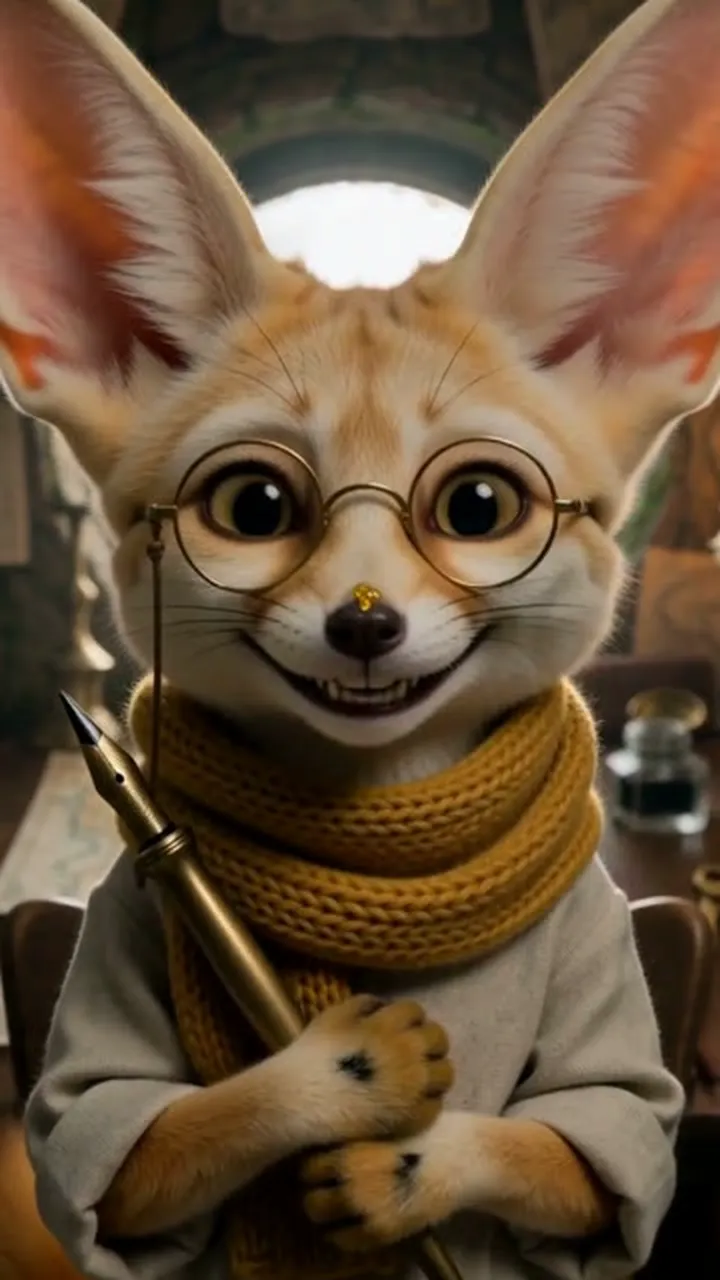
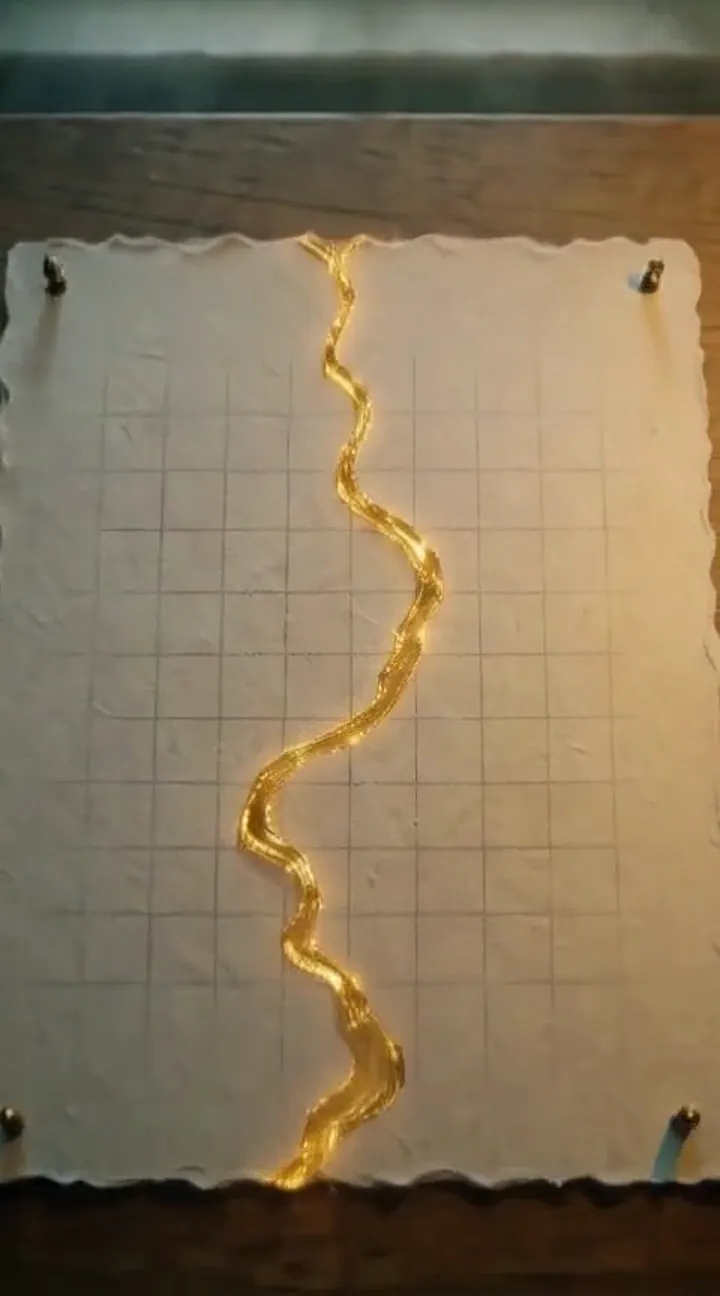
Pip is a young fennec fox who draws maps. In this film she draws the first line of her first map. The ink glows gold, and the valley she is drawing looks up at her and waves. She waves back: “Hello, world.”
I made it as a test. Could one person take a loose idea to a finished, narrated, vertical film in two days, and have it look like one film instead of a pile of clips? This page shows what I did, what the machines did, and what went wrong.
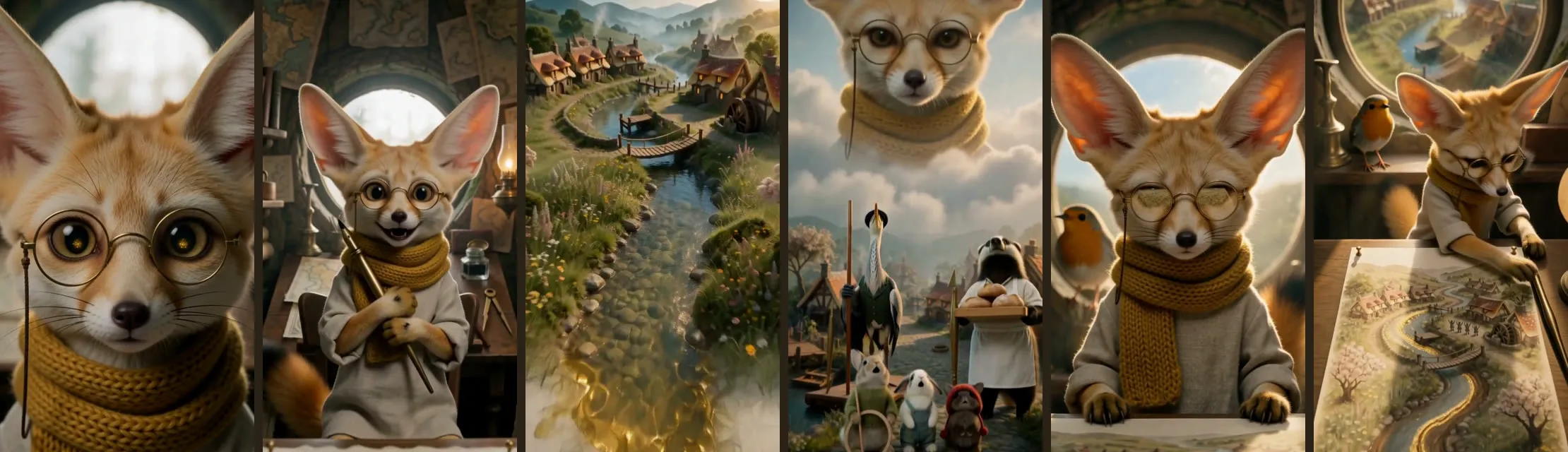
What happened, in order
No prompts and no settings here. Just what I did, and why. See the full workflow →
I wrote it three times
The first draft had five shots. After seeing early rough footage I wanted more action and more expression, so the third draft has thirteen shots, a gold droplet that lands on Pip’s nose, and a near-fall from her stool.
I gave the fox a personality first
Before any picture, Pip got a one-page character file: what she wants, what she fears, and how her ears move when she is curious or astonished. The notes changed the script too. Five of six suggestions stayed in.
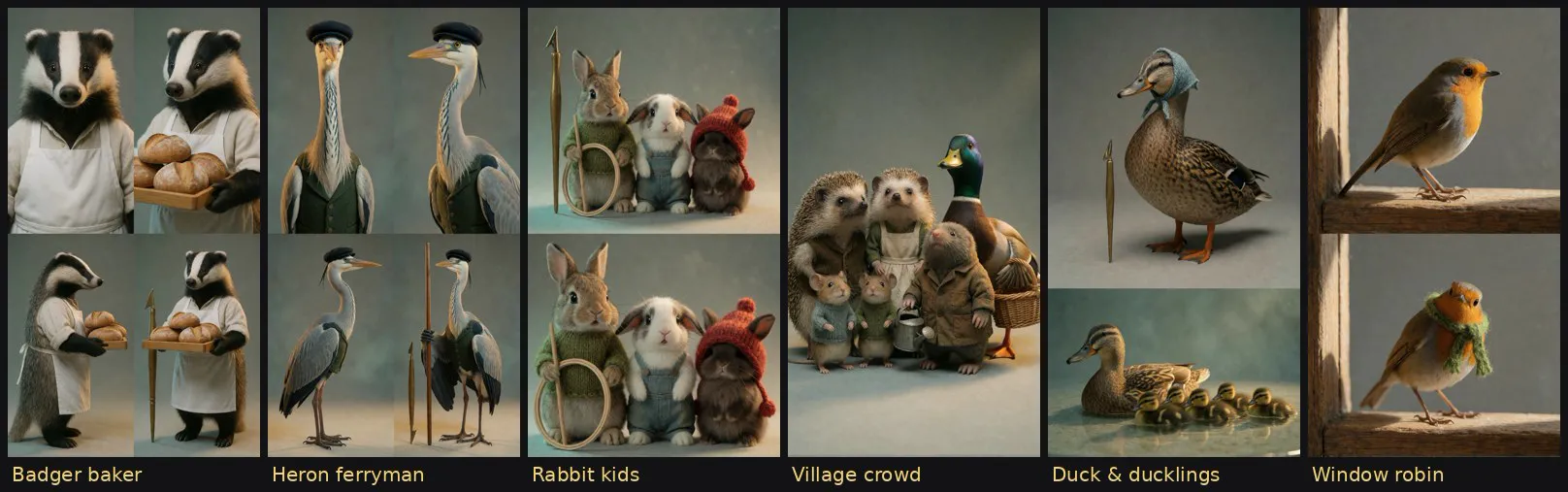
I auditioned ten foxes
Ten different fennecs, in the same outfit, the same light and the same camera, so only the fox changed. I picked the one with the biggest ears and the smallest face.
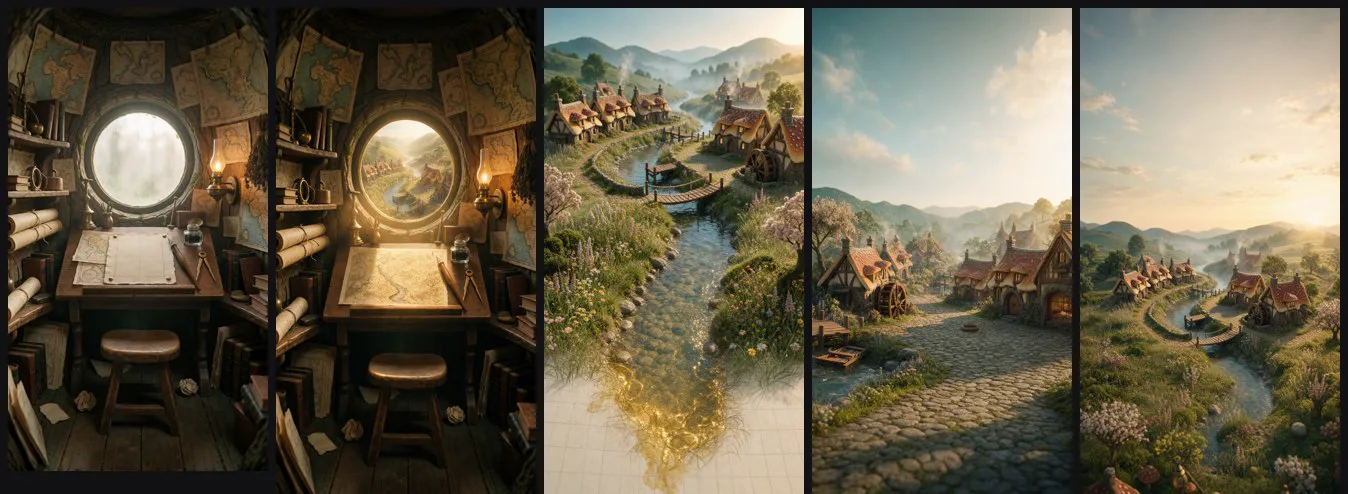
I built the world once, then reused it
Two places: a cluttered study and a valley. I made five versions of each and chose one. Every other view of them, the study in sunlight, the village square, the sky, came from those two, so the world stayed the same from shot to shot.
I made a rough film first
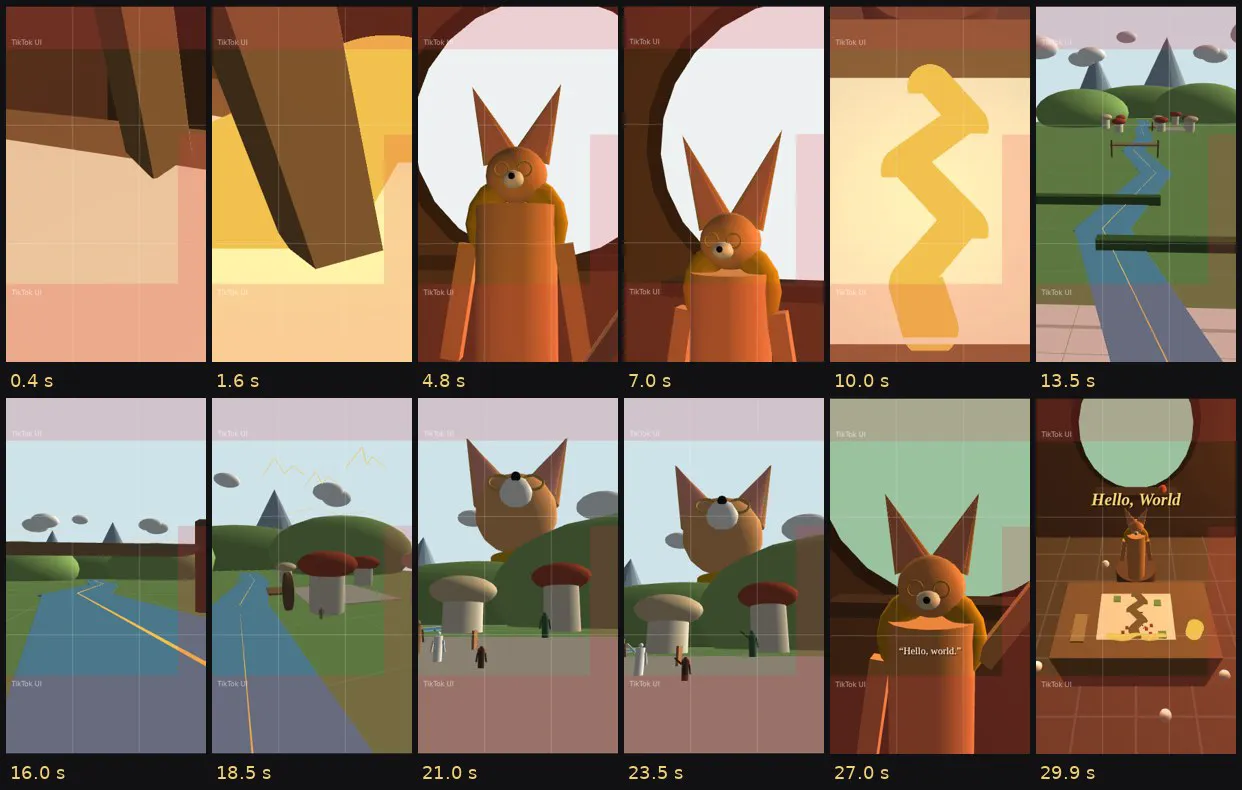
Before spending any render time I built a plain 3D rough cut in a browser, out of boxes and capsules. It answered one question early: can a vertical frame hold the villagers at the bottom and Pip’s face in the sky? It could.
I drafted every sequence cheaply
Each sequence was made quickly at low quality first, so a mistake cost minutes, not hours.
I remade the best takes properly
Only when the drafts worked did I remake the winners at higher quality, then enlarge them to full 1080 by 1920.
I added the voice and the music
Pip says one line, “Hello, world.” A short score sits under it, and the sound effects follow the action: the scratch of the pen, the plip of the droplet.
What the machines did, and what I did
The machines made
- The pictures: faces, rooms, landscapes
- The moving shots, built from those pictures
- The voice and the music
I did
- Wrote the story and rewrote it twice
- Chose every look, every take and every cut
- Kept the world the same from shot to shot
- Decided what was good enough
The machines are fast. They are not good at deciding what is good enough, and that part was most of the work.
What went wrong
A film made this fast breaks in small ways. These are the breaks I caught.
- 1
The first version of the study put the stool on the wrong side of the desk, and gave the brass pen a wooden holder.
- 2
In one shot Pip turned her back to the camera. In a film this short you need to see her face, so I rewrote the shot.
- 3
The desk in the approved room did not match where Pip sits in a later shot. I fixed it in the instructions for that shot, not by changing the picture.
- 4
Late on, I changed the script, and the rough cut was suddenly out of date. A checklist flagged everything that depended on the old version.
- 5
A robin appeared twice in one shot. The fix was to say, plainly, that there is one robin.
Behind the film
Written, directed and edited by Teo Wijayarto. September 2026.
Want a film like this for your brand?
Send me the idea in two lines. I will tell you honestly whether it suits a film, and what I would make.