1. Home
  2. Stories
  3. the stone
the stone

The Rosetta Stone: how one rock taught us to read ancient Egypt

For about 1,400 years, nobody on Earth could read Egyptian hieroglyphs. One reused building stone changed that.

Watch it in Bahasa Indonesia →

Share this story WhatsApp X Facebook LinkedIn

The real story

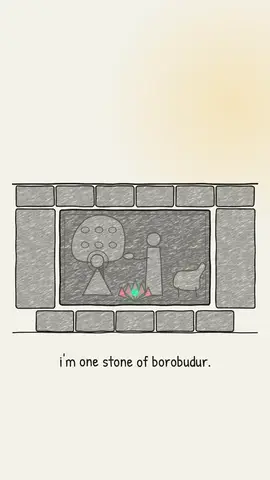
The text on the stone is a priestly decree from 196 BC honouring the young king Ptolemy V, copied in three scripts so that priests, officials and Greek-speaking rulers could all read it. Centuries later it was broken and reused as building stone in a fort near Rashid. In July 1799, French soldiers rebuilding that fort pulled it out of a wall, and an officer realised what it might be.

The British took it under the 1801 surrender terms, and it has been in the British Museum since 1802. The English scholar Thomas Young cracked some of the royal names, but Jean-François Champollion worked out that hieroglyphs mix sound signs with picture signs. He announced it in September 1822, and the story goes that he ran to his brother, shouted 'I've got it!' and fainted.
What the narrator says

Tap a line to jump to it.

The facts we checked

  • The Rosetta Stone carries the same decree from 196 BC in three scripts: hieroglyphs, Demotic and ancient Greek
  • French soldiers found it in 1799 near the town of Rashid (Rosetta) in Egypt
  • In 1822 Jean-François Champollion used it to decipher Egyptian hieroglyphs

Sources

We checked every number and date on screen before the video was made.

Made by teodolist studio

Want a series like this?

Need videos like this for your brand or school?

We made all 240 of these, in English and Indonesian, from one script each. We make story series for brands, schools and channels.