The real story
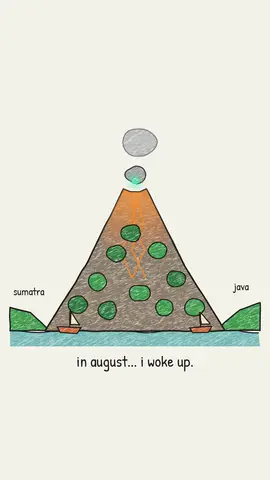
About 74,000 years ago the Toba volcano in North Sumatra blew out an estimated 2,800 cubic kilometres of magma. Ash fell across the Indian Ocean, and a layer around 15 centimetres thick settled over the Indian subcontinent, about 3,000 kilometres away. The empty magma chamber collapsed, leaving a caldera about 100 kilometres long that slowly filled with rain.
Scientists once thought the eruption pushed early humans to the edge of extinction, but stone tools found in India above and below the ash suggest people there lived through it. Later, pressure from below pushed the caldera floor back up and formed Samosir, an island of about 630 square kilometres, close to the size of Singapore. The lake is up to 505 metres deep and is the largest volcanic lake in the world.